
Pre-Op Assessment Guidelines

Updated: Oct 30, 2025
A pre-op assessment is your first step in preparing for your surgery. Pre-op assessment guidelines help keep patients safe and prevent delays. These medical checks protect both the patient and the surgical team from problems during or after the procedure.
Pre‑op assessments have evolved. Virtual evaluations now replace many in‑person visits. Digital tools speed up clearance while maintaining clinical standards.
What this guide covers:
Essential pre-op assessment components and timing requirements
Risk stratification methods for different patient populations
Virtual vs traditional assessment comparison and effectiveness
Common clearance delays and prevention strategies
Updated guidelines from major medical organizations
Risk Assessment and Patient Stratification
Accurate risk assessment is an important part of safe surgical planning. It allows providers to plan for possible problems and prepare for the care a patient may need. The ASA classification and the Revised Cardiac Risk Index are two tools often used to guide pre-op assessments. Additionally, the AUB-HAS2, and the NSQIP are two more updated tools that are used.
The American Society of Anesthesiologists (ASA) classification system remains an important classification system for patient assessment and management.
ASA Classification Breakdown:
ASA 1: Healthy patients with no systemic disease
ASA 2: Patients with mild systemic disease
ASA 3: Patients with severe systemic disease
ASA 4: Patients with life-threatening systemic disease
ASA 5: Moribund patients not expected to survive
The Revised Cardiac Risk Index (RCRI) estimates perioperative heart risk by combining the demands of the planned operation with evidence from the patient’s history that reflects cardiovascular disease, along with metabolic and renal burden.
The 4 Essential Components of Pre-Op Assessments
A complete pre-op assessment combines several key parts to understand the patient's health. This helps identify risks early and guides testing decisions.
1. Medical History Review
A full medical history is the starting point for a pre-op assessment. It gives providers a clear picture of the patient’s health, linking past medical events with current conditions so they can understand how those factors may influence the surgery.
The medical history should include:
Current prescription medications and supplements
Known drug allergies and reactions
Previous anesthetic complications
Smoking and alcohol use patterns
Exercise tolerance and functional capacity
2. Physical Examination Standards
Physical examination requirements vary by patient risk level and surgery type.
Key examination components include:
Vital signs, including blood pressure and heart rate
Cardiovascular assessment with heart sounds
Pulmonary evaluation, including breath sounds
Airway assessment for intubation planning
Neurological screening when indicated
3. Laboratory Testing
Lab work requirements follow evidence-based protocols. Routine testing for healthy patients has decreased based on recent research. The ASA updated its guidelines in 2023 to reduce unnecessary testing.
Laboratory tests should be tailored to patient risk factors rather than ordered routinely. Testing helps detect underlying conditions that could impact surgical outcomes. Testing is ultimately decided by the clinical team.
4. Cardiac Evaluation Protocols
Cardiac evaluation is an important part of the pre-op process for patients with heart disease or other risks. The latest American College of Cardiology (ACC) guidelines focus on how well a patient can function rather than doing the same tests for everyone. A patient who can climb two flights of stairs can be considered fit enough; however, additional heart testing may be needed under current guidelines.
Advanced cardiac testing indications include:
Poor functional capacity plus cardiac risk factors
Unstable cardiac symptoms
High-risk surgical procedures (vascular, thoracic, major abdominal)
Multiple cardiac risk factors present
Concerning findings on EKG
Advantages and Limitations of Virtual Pre-Op Assessments
Telehealth now makes it possible for many pre-op assessments to be completed from home, giving patients faster clearance and better access to care while still supporting in-person visits for parts of the process that need direct examination or testing.
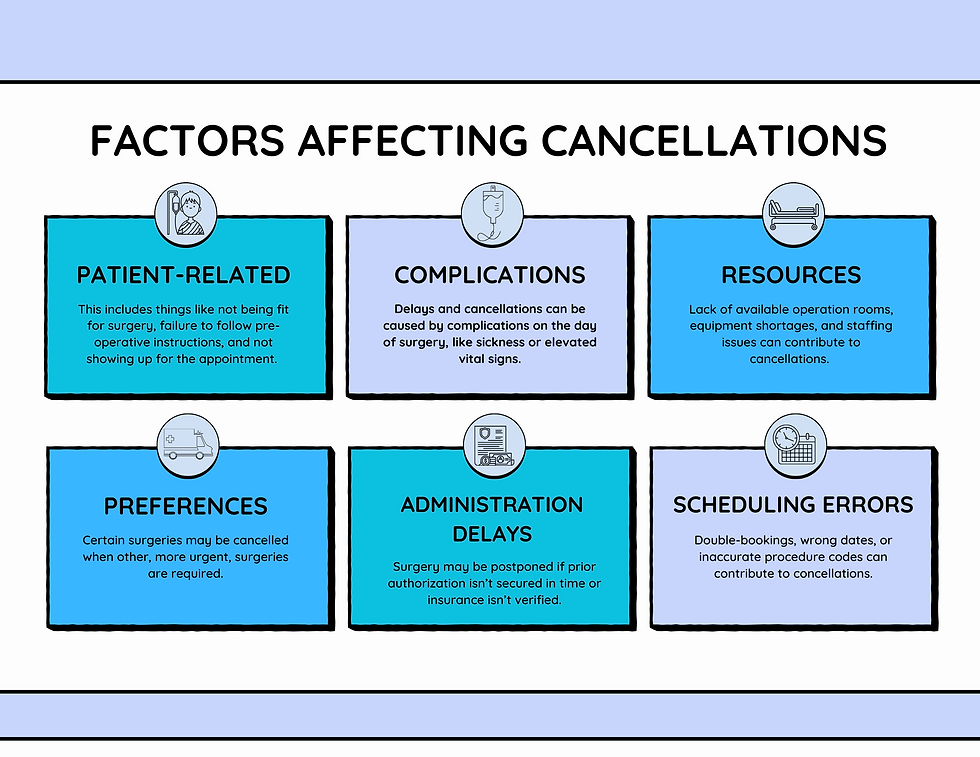
Common Clearance Delays & Solutions
Even when guidelines are followed, certain issues can delay surgical clearance. Identifying these problems early and applying prevention strategies helps keep procedures on schedule.
Recent Guideline Updates
Medical evidence continues to shape surgical clearance standards. Leading organizations have updated pre-op assessment guidelines to reduce unnecessary testing while improving patient outcomes. These changes also expand the role of virtual care in pre op evaluation.
Patient Education and Preparation Standards
Clear communication and preparation help patients meet all pre-op requirements on time. When patients understand the process and what is expected, the risk of last-minute cancellations or delays drops significantly.
Patient education components include:
Detailed pre-op instruction packets
Medication management guidelines
Fasting and preparation requirements
Transportation and support arrangements
Post-assessment follow-up procedures
Communication best practices include:
Multi-language materials for diverse populations
Visual aids and video resources
24-hour helpline access for questions
Automated reminder systems
Family involvement in the education process
Future Trends in Pre-Op Assessment
Pre-op guidelines will keep changing as technology improves care. New digital tools are improving the speed and ease of assessments for patients while also giving providers more accurate information.
Emerging technologies include:
AI-powered risk stratification tools
Wearable device integration for continuous monitoring
Blockchain technology for secure record sharing
Telemedicine expansion for rural populations
Mobile apps for patient self-assessment
Regulatory developments include:
CMS reimbursement changes for virtual visits
Joint Commission updated standards
State licensing adaptations for telehealth
Quality measure refinements
Patient safety initiative expansions
Conclusion and Action Steps
Modern pre-op assessment guidelines aim for thorough evaluation while eliminating unnecessary testing. Using evidence-based protocols helps healthcare providers improve safety and keep procedures on schedule. Virtual assessments now support this process by giving patients quicker access to clearance without lowering care standards.
Implementation priorities:
Staff training on updated protocols
Digital platform integration for efficient workflows
Tracking key metrics for performance and safety
Clear patient communication and preparation resources
Regular review and refinement of processes
The consistent use of these pre-op assessment guidelines ensures patients are well-prepared for surgery and providers meet the highest standards of care.
Get Cleared with MyPreOp
Ready for your pre-op clearance? MyPreOp provides secure assessments that follow current guidelines and can be completed from home. Our team works to prevent delays so you can receive clearance in as little as 24 to 48 hours.
Start your pre-op assessment today and experience the convenience of expert-led virtual evaluations.
Contact MyPreOp by phone at (424) 224-9151, email at contact@mypreop.org, or book your appointment through our patient online form. Surgical staff? Book a demo.


Comments